

Key takeaways
- Choose specific requirements rather than every word in the posting.
- Connect each important keyword to evidence from your experience.
- Describe your actual level of skill and responsibility.
- Explain unfamiliar terms without changing your qualifications.
- Use natural language instead of chasing a keyword score.
You know the work, but your resume may describe it differently from the employer. A posting asks for inventory reconciliation. Your resume says you helped with stock. The connection is there, but the reader has to work to find it.
Choosing keywords is a translation task. Use the employer’s language where it accurately describes your experience. Keep enough detail to show what you actually did.
Separate useful keywords from general wording
Read the posting once for the role, then again for specific requirements. Mark tools, processes, credentials, technical skills and deliverables. Separate required qualifications from preferences.
For an administrative role, useful terms might include scheduling, invoice processing and Microsoft Excel. “Energetic superstar” tells you less about the work. Do not build your resume around every adjective in an advertisement.
Concordia University’s ATS guidance supports using relevant posting terminology when it matches your qualifications. It also rejects hidden-keyword tricks.
FREE RESUME REVIEW
Is your resume ready for Canadian employers?
Get a free Canadian resume review to see what’s working, what needs attention, and how to better present your experience to Canadian employers....
Upload your resume to get started.
Build a keyword-to-evidence map
Create three columns in your working notes: the requirement, your evidence and where that evidence belongs. This is a preparation tool, not a table to paste into the resume.
- Requirement: Inventory reconciliation.
- Evidence: Compared received quantities with purchase orders and investigated differences.
- Placement: A bullet under the position where you performed that work.
Leave a requirement unmapped if you cannot support it. A short course, supervised exposure and independent responsibility are different levels of experience. Describe the level you actually have.
If your experience comes from outside Canada, retain its substance. Explain unfamiliar internal terms using recognisable professional language. Do not rename an overseas qualification as a Canadian licence or imply that you hold a designation you have not earned.
Canadian Expert Insight
Your next opportunity may not come from having the perfect Canadian Style Resume. It may come from making it easy for someone to see what you can do.
Canadian jobseekers come from different industries, communities, and stages of life. Some are starting out. Others are changing careers, returning to work, or bringing experience from another country. Wherever you are starting, focus on the value you can offer now.

Chief Canadian Resume Writer
Helping professionals position their experience for the Canadian job market with resumes that communicate value clearly and confidently.
Team Lead & Career Coach
Helping professionals strengthen their career positioning, navigate the Canadian job market, and move forward with greater clarity and confidence.
Use keywords inside meaningful examples
A skills list can name a tool. A work example can show how you used it. Both may be useful, provided they agree.
Illustrative revision: “Helped with reports” becomes “Used Excel pivot tables to summarise weekly purchasing data for the operations manager.” Use this example only as a pattern. Include pivot tables only if you actually used them.
Spell out a specialised abbreviation on first use when readers may not know it. Preserve official software names and credential titles. If a posting uses both a full term and an abbreviation, including both once can improve clarity.
For help choosing which experience to emphasise, read How to Match Your Canadian Resume to the Job Description.
FREE RESUME REVIEW
Is Your Resume Holding You Back in Canada?
Get a free Canadian resume review to discover what’s working, what could be holding you back, and where you can improve.
Upload your resume to get started.
Review relevance instead of chasing a score
Read the revised resume aloud. If a sentence sounds like a pile of search terms, rewrite it. Remove repeated words that add no evidence.
Search your document for the role’s most important requirements. Check whether each truthful match is easy to find. Then check that the file remains readable and that the application form reflects the same information.
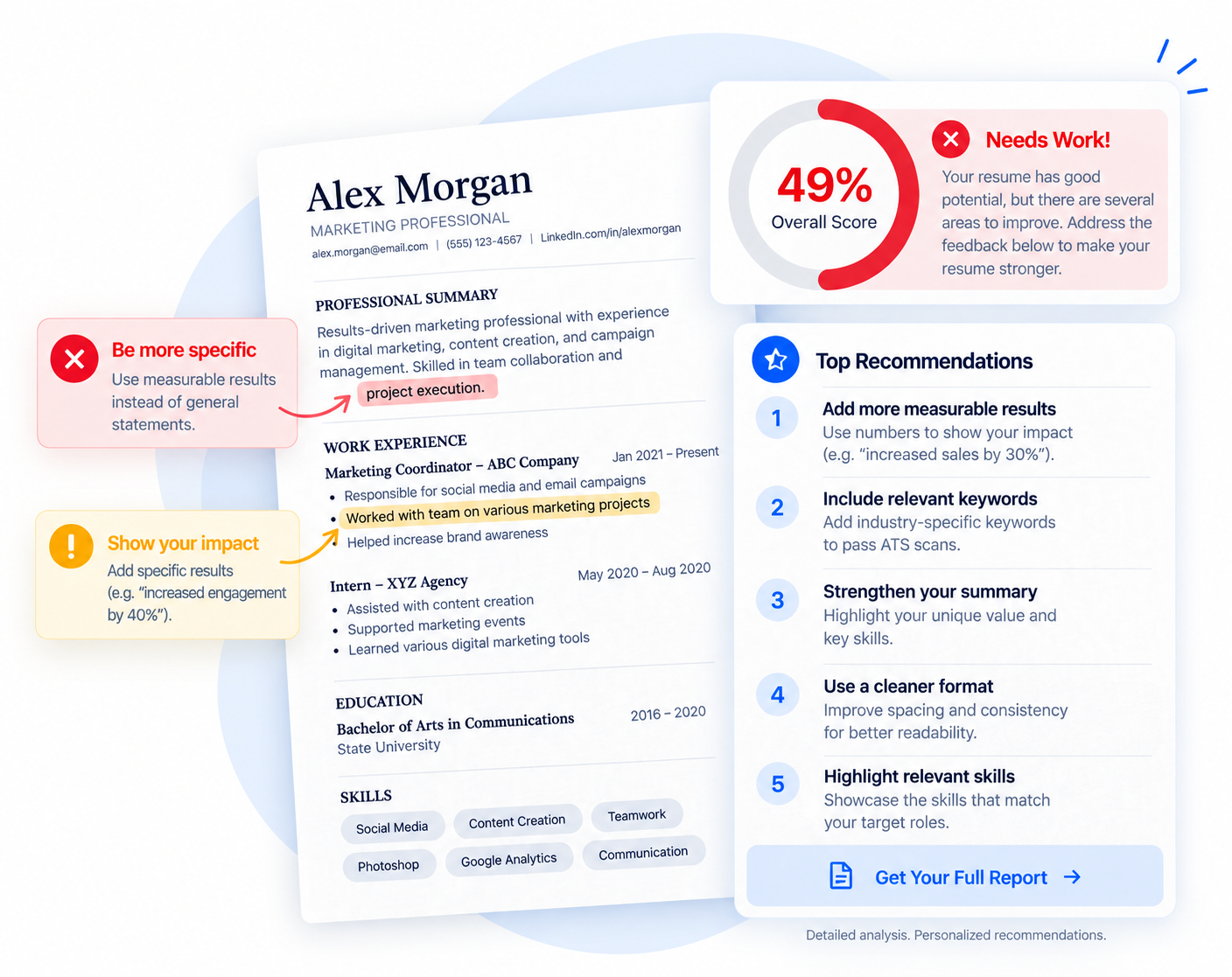
A commercial keyword score is feedback from that tool. It is not the employer’s hiring decision. Different employers configure their recruitment processes differently. There is no universal keyword percentage that guarantees an interview.
Finish by asking: can I explain every listed skill with a real example? If yes, the language is doing useful work for both the recruiter and your interview preparation.
FAQs
How many keywords should I include?
There is no fixed number. Cover the important requirements you can support. Repeating a term many times is less useful than explaining where and how you used the skill.
Can I copy phrases from the job posting?
Use accurate professional terms, tool names and process names. Write your own examples around them. Do not copy a responsibility and present it as something you accomplished.
Should I add skills I am learning?
You can describe relevant study or training accurately. Distinguish a course project or beginner knowledge from experience using the skill independently at work.
Will the right keywords guarantee an interview?
No. Keywords help communicate relevance. Qualifications, evidence, application questions and the employer’s selection process still matter.