

Key takeaways
- Include accurate, reachable contact details.
- Use city and province for practical location context when appropriate.
- Leave SIN, identity-document numbers and banking details out.
- Present international experience and credentials accurately.
- Treat optional disclosures and application-form questions separately.
Resume customs differ across countries. You may have used a photograph, date of birth or family details in an earlier job search. A Canadian application may call for a different approach.
Keep the resume focused on your qualifications and the information needed to contact you. You do not need to erase your international experience or identity to make the document useful.
Make your contact details easy to use
Place your name, professional email and reachable phone number at the top. Check every character. Include an international dialling code if the number could otherwise be misunderstood.
City and province can provide useful location context. The University of Alberta advises excluding a full home address at the application stage. If an employer requires an address in a separate application form, assess that request there.
Add a LinkedIn profile or portfolio when it is current, relevant and suitable for an employer to view. Test the link before submitting.
FREE RESUME REVIEW
Is your resume ready for Canadian employers?
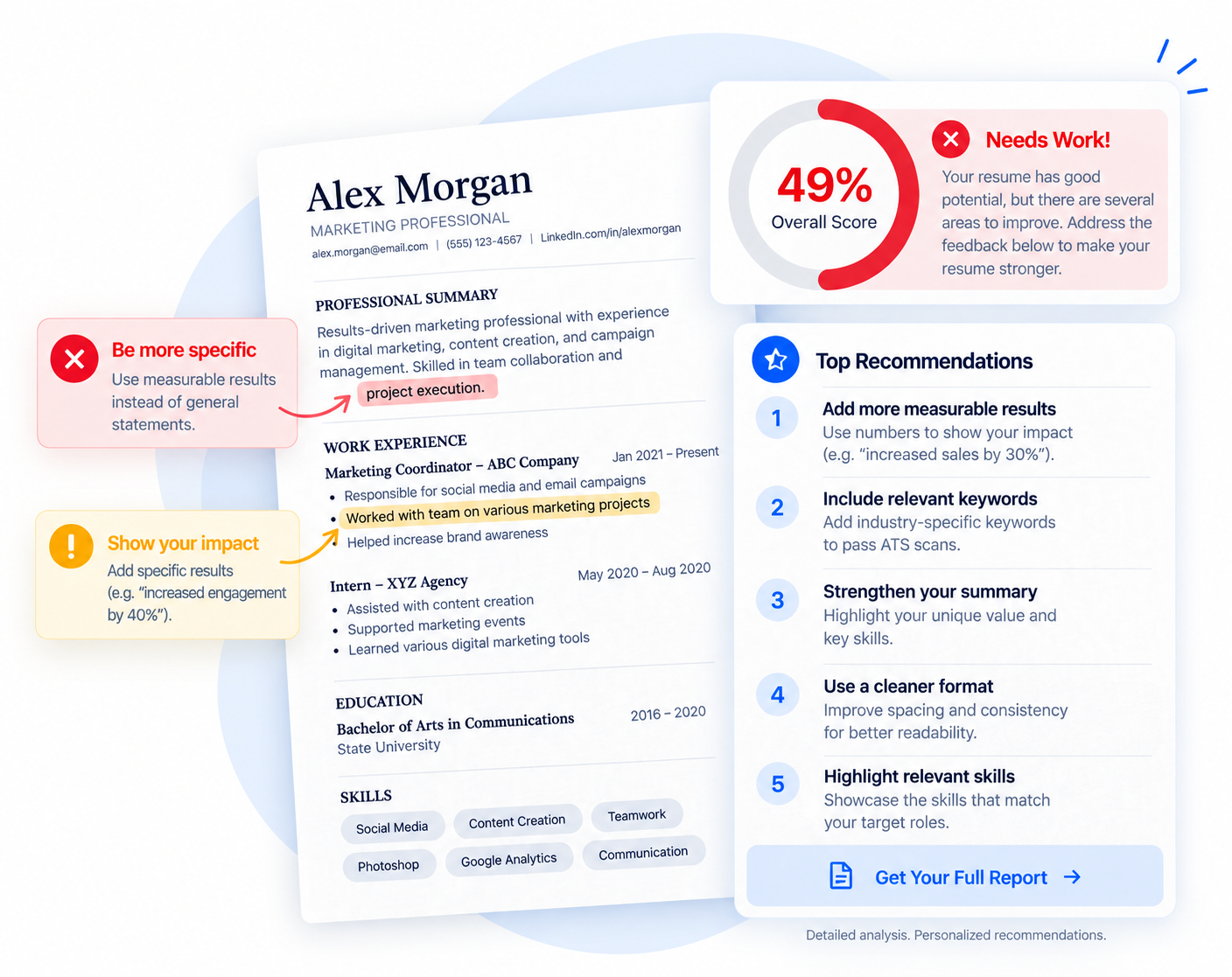
Get a free Canadian resume review to see what’s working, what needs attention, and how to better present your experience to Canadian employers....
Upload your resume to get started.
Leave sensitive details out of the resume
Job Bank advises against including a Social Insurance Number, photograph and unnecessary personal details such as age or marital status.
A practical resume review should also catch identity-document numbers, banking information and unrelated family details. Those do not explain your ability to do the job.
Do not treat a request in an unfamiliar email as proof that sensitive documents are needed. Check the organisation and hiring contact through a trusted channel before sharing information outside the normal application process.
This article describes resume-writing practice. It does not determine what an employer may legally request in every province, occupation or recruitment programme.
Canadian Expert Insight
Your next opportunity may not come from having the perfect Canadian Style Resume. It may come from making it easy for someone to see what you can do.
Canadian jobseekers come from different industries, communities, and stages of life. Some are starting out. Others are changing careers, returning to work, or bringing experience from another country. Wherever you are starting, focus on the value you can offer now.

Chief Canadian Resume Writer
Helping professionals position their experience for the Canadian job market with resumes that communicate value clearly and confidently.
Team Lead & Career Coach
Helping professionals strengthen their career positioning, navigate the Canadian job market, and move forward with greater clarity and confidence.
Explain location and eligibility without oversharing
If you are relocating, state your plan accurately when it helps: “Relocating to Calgary, Alberta in September.” Do not use a Canadian address to imply that you already live there when you do not.
If asked about work eligibility, answer truthfully through the employer’s application process. A brief statement may be useful in context, but your resume does not need copies of permits or immigration documents.
Language skills, overseas education and international work can be relevant strengths. Describe them in terms of the role. Give your actual level of language ability and the exact status of a credential or assessment.
Never describe an assessment as a professional licence. If a role requires registration, make your current registration status clear.
FREE RESUME REVIEW
Is Your Resume Holding You Back in Canada?
Get a free Canadian resume review to discover what’s working, what could be holding you back, and where you can improve.
Upload your resume to get started.
Review personal links and optional disclosures
A portfolio should open without requesting access and show work you are authorised to share. Remove private client information. A LinkedIn profile should agree with the basic dates and titles in your resume.
Voluntary self-identification questions or accommodation requests are separate from the resume’s main purpose. Read the employer’s process and decide what you wish to disclose through the appropriate channel. You do not need to add personal information simply to fill space.
Before uploading, check the document for leftover template details, another person’s email and tracked changes. Confirm that the filename identifies you appropriately.
Your final test is simple: does each personal detail help the employer contact you or understand a relevant qualification? If it does neither, consider leaving it out.
FAQs
Do I need a photograph?
A photograph is generally not part of a standard Canadian resume. Follow verified, role-specific instructions if a portfolio or casting process has different requirements.
Should I include my full street address?
For many standard applications, city and province provide useful context without publishing your full address. Follow a verified application process if additional address details are required.
Should I put my immigration documents on my resume?
No. Do not attach identity or immigration documents to the resume itself. Answer eligibility questions accurately and use a verified channel for any later document request.
Can I include experience from another country?
Yes. Include relevant experience and explain unfamiliar organisations or qualifications. Keep names and credential status accurate instead of inventing Canadian equivalents.