

Key takeaways
- Give each bullet one main purpose.
- Start with an action and explain what you worked on.
- Replace vague wording with useful detail.
- Choose verbs that reflect your actual contribution.
- Edit for clarity instead of forcing every bullet to the same length.
A long bullet can contain good experience and still hide the point. By the time the reader reaches the end, they may have forgotten the action at the beginning.
The goal is not to make every bullet as short as possible. It is to give each statement one clear job.
Decide what each bullet should prove
Choose the requirement the example supports. Is it planning, analysis, customer service or technical delivery? Start with that purpose before choosing an action verb.
A sentence that combines scheduling, payroll, recruitment and stock control probably contains several examples. Split it where the work changes, then keep the examples most useful for the target role.
Think of the bullet as evidence. If it simply repeats a skill label, the reader still has to imagine how you used the skill.
FREE RESUME REVIEW
Is your resume ready for Canadian employers?
Get a free Canadian resume review to see what’s working, what needs attention, and how to better present your experience to Canadian employers....
Upload your resume to get started.
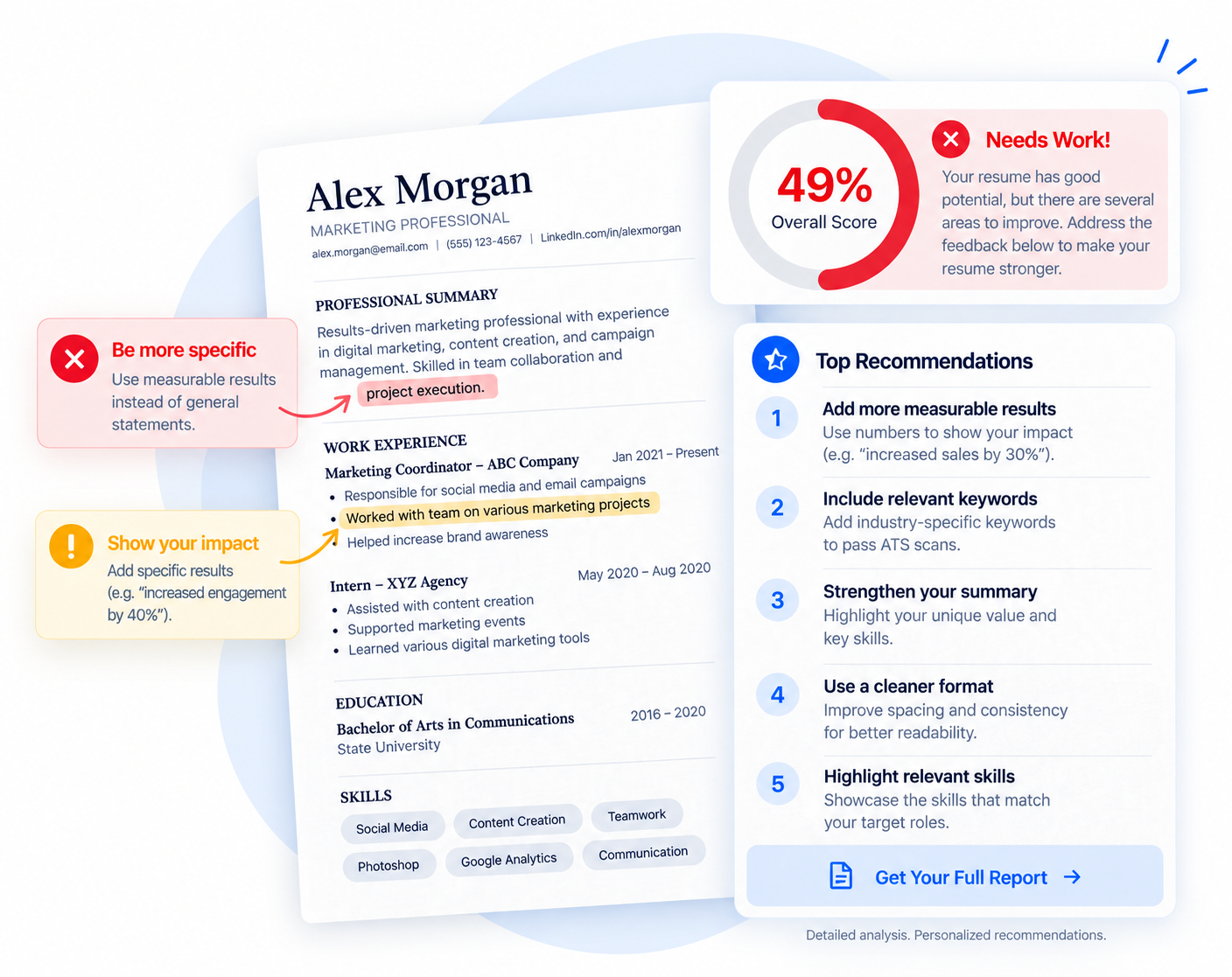
Build the sentence around action and context
A useful drafting pattern is action, task or problem, then a relevant outcome or purpose. You do not need to force every example into the same formula.
Before: “Was responsible for helping with the preparation of various reports and communicating information to different people in management.”
Illustrative revision: “Prepared weekly inventory reports and flagged stock discrepancies for the operations manager.”
The revision identifies a deliverable, a useful action and the audience. It does not add unverified savings or claim that every discrepancy was resolved.
Replace “various,” “numerous” and “all aspects of” with a specific description when possible. Keep technical terms that matter, but explain internal acronyms that an outside reader would not recognise.
Canadian Expert Insight
Your next opportunity may not come from having the perfect Canadian Style Resume. It may come from making it easy for someone to see what you can do.
Canadian jobseekers come from different industries, communities, and stages of life. Some are starting out. Others are changing careers, returning to work, or bringing experience from another country. Wherever you are starting, focus on the value you can offer now.

Chief Canadian Resume Writer
Helping professionals position their experience for the Canadian job market with resumes that communicate value clearly and confidently.
Team Lead & Career Coach
Helping professionals strengthen their career positioning, navigate the Canadian job market, and move forward with greater clarity and confidence.
Keep your role and level of ownership accurate
Choose verbs that match your contribution. Leading a project, supporting it and completing a task within it are different responsibilities. Strong writing does not require inflating the role.
For work in an unfamiliar organisation or country, add enough context to make the task understandable. The reader may not know that a local programme served several sites or that a title covered specialist work.
Preserve official titles and qualifications. Explain their function rather than replacing them with a more senior Canadian title.
Use present tense for ongoing duties and past tense for completed work. A current job can contain both. Consistency should clarify timing, not erase that distinction.
FREE RESUME REVIEW
Is Your Resume Holding You Back in Canada?
Get a free Canadian resume review to discover what’s working, what could be holding you back, and where you can improve.
Upload your resume to get started.
Edit for useful detail rather than a rigid word limit
Read each bullet once and identify its main message. Cut introductory phrases that delay the action. Remove a second idea if it competes with the first.
One or two readable lines is a useful visual aim in many layouts, not a universal rule. A longer statement may be justified when it explains essential technical context. Do not shrink the font to meet an arbitrary line target.
Ask someone outside your workplace to read a few examples. Can they explain what you did? If not, add context or simplify the wording.
When a number would clarify the evidence, use a verified figure. When it would not, keep the statement concrete. The achievements article can help you identify examples worth keeping.
FAQs
How long should a bullet be?
Long enough to explain the relevant action and context. Aim for easy scanning, but do not treat a fixed word count or line count as a hiring rule.
Should every bullet start with a different verb?
Variety can help, but accuracy matters more. Do not choose an impressive synonym that changes the meaning of your contribution.
Can I include responsibilities?
Yes, when they establish relevant scope. Make them specific and balance them with examples of work completed, problems handled or contributions made.
Should I use full sentences?
Concise statements without “I” usually work well. Keep grammar and punctuation consistent. Avoid fragments so compressed that the meaning becomes unclear.