

Key takeaways
- Measure outcomes, volume, scope or time according to the point you need to make.
- Keep a defensible source and timeframe for each number.
- Separate your contribution from the team’s overall result.
- Distinguish percentages from percentage-point changes.
- Use concrete deliverables when reliable metrics are unavailable.
“Improved performance” sounds positive, but it leaves several questions unanswered. What improved? Compared with what? What part did you play?
A useful number answers one of those questions. It can show an outcome, workload, timeframe or the size of a responsibility. It does not need to be a dramatic percentage.
Choose a measure that explains the work
Start with the point you want the reader to understand. A service role may involve customer volume. A training role may involve participants or locations. A project role may involve deadlines or deliverables.
Job Bank recommends quantifying achievements. Our practical approach is to use numbers only when you can explain their source and meaning.
A count of completed tasks shows volume. It does not automatically prove quality or improvement. State the distinction clearly so a recruiter can judge the evidence fairly.
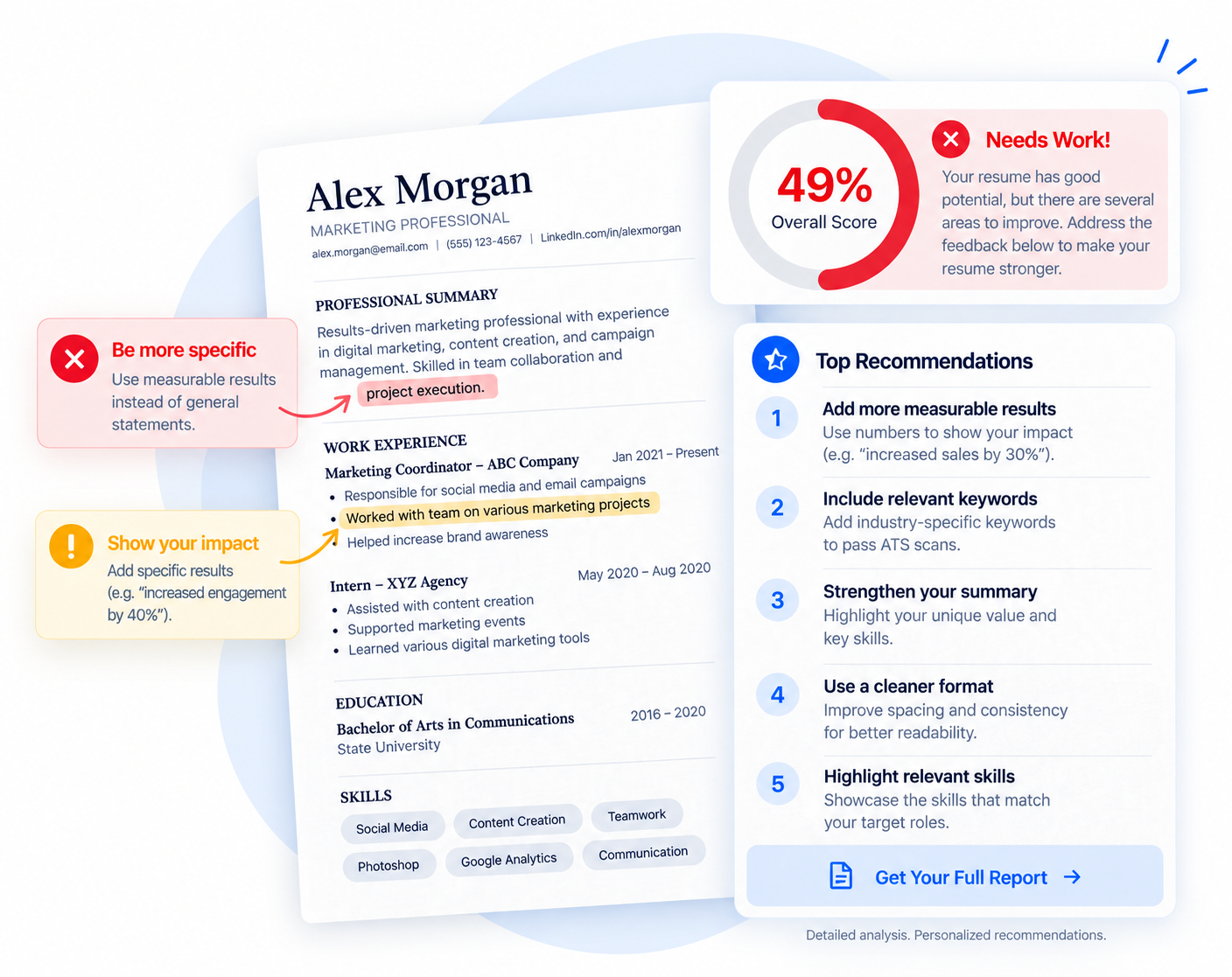
FREE RESUME REVIEW
Is your resume ready for Canadian employers?
Get a free Canadian resume review to see what’s working, what needs attention, and how to better present your experience to Canadian employers....
Upload your resume to get started.
Find numbers you can defend
Review records you are authorised to use: schedules, project summaries, approved reports and your own reliable notes. Record the unit, period and source before drafting a claim.
- Volume: Orders processed during a typical week.
- Scope: People, locations or accounts supported.
- Time: A verified completion deadline or turnaround.
- Outcome: A documented change against a clear baseline.
Do not take confidential records from an employer to support your application. Use approved, non-sensitive descriptions. If a number cannot be shared, describe the nature of the responsibility instead.
For work outside Canada, give the context needed to understand the scale. Identify the currency if it matters. Avoid converting a historical amount into Canadian dollars unless you can explain the conversion and it helps the reader.
Canadian Expert Insight
Your next opportunity may not come from having the perfect Canadian Style Resume. It may come from making it easy for someone to see what you can do.
Canadian jobseekers come from different industries, communities, and stages of life. Some are starting out. Others are changing careers, returning to work, or bringing experience from another country. Wherever you are starting, focus on the value you can offer now.

Chief Canadian Resume Writer
Helping professionals position their experience for the Canadian job market with resumes that communicate value clearly and confidently.
Team Lead & Career Coach
Helping professionals strengthen their career positioning, navigate the Canadian job market, and move forward with greater clarity and confidence.
Connect the number to your contribution
Illustrative example: “Coordinated onboarding sessions for 24 employees across three locations over six weeks.” The numbers explain scope and timing. They do not claim improved retention or faster productivity.
For a measured improvement, define the starting and ending values. A fall from 10 errors to 7 is three fewer errors and a 30% reduction. A rate falling from 10% to 7% is a decrease of three percentage points. These are different descriptions.
If the result belongs to a team, name your contribution: “Prepared the weekly tracking reports for a team project that…” Do not present a department’s entire result as your individual achievement.
Use numbers from your own work. The examples here demonstrate wording and arithmetic, not results to copy into an application.
FREE RESUME REVIEW
Is Your Resume Holding You Back in Canada?
Get a free Canadian resume review to discover what’s working, what could be holding you back, and where you can improve.
Upload your resume to get started.
Write a credible result when metrics are unavailable
You may not have access to sales reports or performance dashboards. That does not make the experience worthless. Identify a completed deliverable, a solved problem or a responsibility you can describe precisely.
“Created a step-by-step returns guide used during cashier onboarding” is more informative than an invented claim about reducing errors. An accurate scope estimate can be useful if you have a reasonable basis; label it as approximate and avoid false precision.
For the broader task of recognising achievements, read How to Highlight Your Achievements on a Canadian Resume.
Before submitting, explain each number aloud as if you were in an interview. If the source, timeframe or your role is unclear, revise the claim.
FAQs
Does every bullet need a number?
No. Use a number when it makes the example clearer. A specific problem, deliverable or technical action may provide useful evidence without a metric.
Can I estimate a workload?
Use an estimate only when you have a reasonable basis, such as a consistent schedule or reliable records. Label it approximately. Do not guess at revenue, savings or improvements.
What if the results are confidential?
Keep confidential figures out of your resume. Use an approved general description of scope or describe the work without the figure. Follow your confidentiality obligations.
Can I use a team result?
Yes, when you can substantiate it and explain your role accurately. Describe what you contributed rather than claiming sole responsibility for the full outcome.